How to test if a universal double socket is working properly?
Leave a message

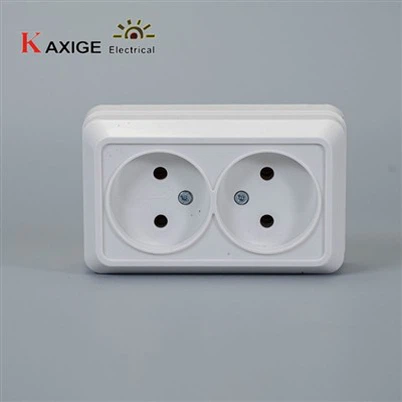
Hey there! As a supplier of universal double sockets, I often get asked how to test if these sockets are working properly. In this blog, I'll share some practical methods to help you check the functionality of your universal double sockets.
Why Testing is Important
Before we dive into the testing methods, let's talk about why it's crucial to test your universal double sockets. A faulty socket can pose serious safety risks, such as electrical shocks, short circuits, and even fires. By regularly testing your sockets, you can ensure the safety of your home or workplace and prevent potential hazards.
Tools You'll Need
To test a universal double socket, you'll need a few basic tools:
- Voltage Tester: This tool is used to check if there is voltage present in the socket. You can find voltage testers at most hardware stores.
- Multimeter: A multimeter is a more advanced tool that can measure voltage, current, and resistance. It's useful for more detailed testing.
- Plug-In Appliance: You'll need a small, working appliance, such as a lamp or a phone charger, to test the socket's functionality.
Step-by-Step Testing Process
Now, let's go through the step-by-step process of testing a universal double socket:
Step 1: Visual Inspection
Before you start testing, take a close look at the socket. Check for any visible damage, such as cracks, burns, or loose connections. If you notice any damage, do not attempt to test the socket. Instead, replace it immediately.
Step 2: Check for Voltage
Use a voltage tester to check if there is voltage present in the socket. Insert the tester into the socket's slots. If the tester lights up or beeps, it means there is voltage present. If the tester does not light up or beep, there may be a problem with the electrical supply or the socket itself.
Step 3: Test the Socket with an Appliance
Plug in a small, working appliance, such as a lamp or a phone charger, into the socket. If the appliance turns on, it means the socket is working properly. If the appliance does not turn on, there may be a problem with the socket or the appliance itself.
Step 4: Check the Grounding
Use a multimeter to check the grounding of the socket. Set the multimeter to the resistance setting and touch one probe to the grounding terminal of the socket and the other probe to a known ground, such as a metal water pipe. If the multimeter shows a low resistance reading, it means the socket is properly grounded. If the multimeter shows a high resistance reading or no reading at all, there may be a problem with the grounding.
Step 5: Test the Other Socket
If your universal double socket has two sockets, repeat the above steps for the other socket. Make sure both sockets are working properly.
Common Problems and Solutions
Here are some common problems you may encounter when testing a universal double socket and their solutions:
- No Voltage: If there is no voltage present in the socket, check the circuit breaker or fuse box to make sure the circuit is not tripped or blown. If the circuit breaker or fuse is fine, there may be a problem with the wiring or the electrical supply. Contact a qualified electrician to diagnose and fix the problem.
- Appliance Does Not Turn On: If the appliance does not turn on when plugged into the socket, check the appliance itself to make sure it is working properly. If the appliance is working, there may be a problem with the socket. Try plugging the appliance into another socket to see if it works. If the appliance works in another socket, the problem is likely with the original socket. Contact a qualified electrician to diagnose and fix the problem.
- Grounding Problem: If the multimeter shows a high resistance reading or no reading at all when testing the grounding of the socket, there may be a problem with the grounding. Check the grounding wire to make sure it is properly connected. If the grounding wire is fine, there may be a problem with the electrical supply or the wiring. Contact a qualified electrician to diagnose and fix the problem.
Additional Tips
Here are some additional tips to help you test your universal double sockets safely and effectively:
- Turn Off the Power: Before you start testing the socket, turn off the power to the circuit at the circuit breaker or fuse box. This will prevent electrical shocks and other hazards.
- Use the Right Tools: Make sure you use the right tools for the job. Using the wrong tools can damage the socket or cause electrical hazards.
- Follow the Instructions: Read and follow the instructions that come with your voltage tester, multimeter, and other tools. This will ensure that you use the tools safely and effectively.
- Test Regularly: It's a good idea to test your universal double sockets regularly to ensure their safety and functionality. You can test them once a month or as recommended by the manufacturer.
Conclusion
Testing your universal double sockets is an important part of maintaining the safety and functionality of your electrical system. By following the steps outlined in this blog, you can easily test your sockets and identify any potential problems. If you encounter any problems that you are not comfortable fixing yourself, contact a qualified electrician to diagnose and fix the problem.
If you're in the market for high-quality universal double sockets or other electrical products, we're here to help. We offer a wide range of products, including the 73B 1 Gang Switch, 73B Dimmer Switch, and 73B 1 Gang Socket Grounding. Contact us today to discuss your needs and get a quote.


References
- Electrical Safety Foundation International. (n.d.). Electrical Safety Tips. Retrieved from https://www.esfi.org/safety-tips
- National Fire Protection Association. (n.d.). Electrical Fires. Retrieved from https://www.nfpa.org/Public-Education/By-topic/Home-and-Community-Safety/Fire-causes-and-risks/Electrical-fires