Can I charge my phone directly from a socket?
Leave a message

In our modern, hyper - connected world, smartphones have become an indispensable part of our daily lives. From staying in touch with loved ones to managing work, from entertainment to navigation, our phones are always by our side. And with this constant use comes the ever - present need for charging. One common question that often pops up is, "Can I charge my phone directly from a socket?" Let's delve into this topic in detail.
The Basics of Charging
To understand whether you can charge your phone directly from a socket, we first need to understand how charging works. A smartphone battery stores electrical energy in a chemical form. When you connect your phone to a power source, an electrical current flows into the battery, converting the electrical energy back into chemical energy for storage.
The electrical power that comes from a standard household socket is typically alternating current (AC). In most countries, the voltage of the AC power from a socket ranges from 100V to 240V, and the frequency is either 50Hz or 60Hz. On the other hand, smartphones require direct current (DC) power, usually at a much lower voltage, often around 5V.
The Role of Chargers
This is where chargers come into play. A charger, also known as an AC adapter, is a device that converts the high - voltage AC power from the socket into low - voltage DC power suitable for your phone. It has a built - in transformer and rectifier circuit. The transformer reduces the high voltage from the socket to a lower level, and the rectifier converts the AC power to DC power.
So, technically, you cannot charge your phone directly from a socket without a charger. Plugging your phone directly into the socket would expose it to the high - voltage AC power, which would likely damage the phone's battery and internal components immediately. The charger acts as a crucial intermediary, ensuring that the power supplied to your phone is safe and appropriate.
Safety Considerations
Even when using a charger, there are still safety considerations. Using a low - quality or counterfeit charger can pose risks. These chargers may not have proper voltage regulation or insulation, which could lead to overcharging, overheating, or even electrical short - circuits. Overcharging can damage the battery's lifespan and may cause it to swell or even catch fire in extreme cases.
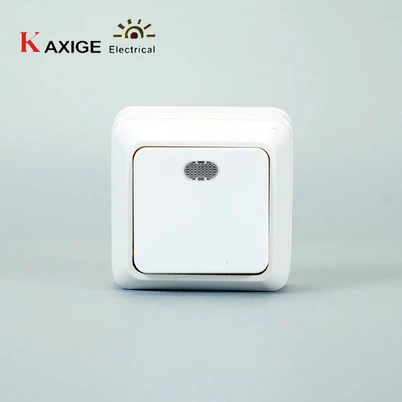
At [Our Company] (not provided, so placeholder), as a socket and switch electrical supplier, we understand the importance of safety. That's why we offer a wide range of high - quality sockets and switches, such as the 73B 1 Gang Socket 2P. These products are designed and manufactured to meet strict safety standards, ensuring a stable and safe power supply for your chargers.
Compatibility and Charging Speed
Another aspect to consider is the compatibility between your phone and the charger. Different phones have different charging requirements. Some newer smartphones support fast - charging technologies, which require chargers that can deliver higher power. For example, some phones support Qualcomm Quick Charge or USB Power Delivery (USB - PD). Using a charger that does not support these fast - charging technologies may result in slower charging speeds.
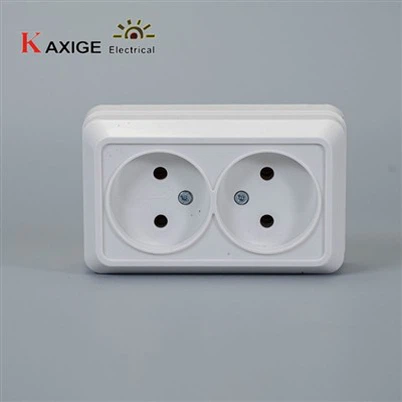
Our company also provides a variety of electrical products that can support different charging needs. For instance, the 73B Dimmer Switch can be used in conjunction with your charging setup to control the power supply in a room, which can be useful for energy - saving purposes. And if you need multiple charging points, the 73B 2 Gang Sockets Grounding can provide convenient access to power for multiple devices at the same time.
The Future of Charging
The field of charging technology is constantly evolving. Wireless charging has become increasingly popular in recent years. It allows you to charge your phone without plugging it into a charger physically. Instead, the phone is placed on a wireless charging pad, which uses electromagnetic induction to transfer power to the phone. However, even with wireless charging, you still need to plug the charging pad into a socket through a charger.
There are also emerging technologies such as solar - powered chargers and kinetic chargers. Solar - powered chargers use sunlight to generate electricity, and kinetic chargers convert mechanical energy, such as the movement of your body, into electrical energy. But these technologies are still in the early stages of development and may not be as reliable or efficient as traditional chargers yet.


Conclusion
In conclusion, you cannot charge your phone directly from a socket without a charger. Chargers play a vital role in converting the high - voltage AC power from the socket into low - voltage DC power that your phone can use safely. When choosing a charger and related electrical products, it is essential to consider safety, compatibility, and charging speed.
As a leading socket and switch electrical supplier, we are committed to providing high - quality products that meet your charging needs. Whether you are looking for a single socket for your bedside table or multiple gang sockets for an office, we have the right solutions for you.
If you are interested in our products and would like to discuss your procurement needs, please feel free to reach out to us. We look forward to serving you and helping you find the best electrical solutions for your charging requirements.
References
- "Mobile Phone Charging Technology: A Comprehensive Guide" by Electronics Today Magazine.
- "Safety Standards for Electrical Sockets and Chargers" published by the International Electrotechnical Commission (IEC).
- "The Future of Wireless Charging" in Technology Innovations Journal.