What is the difference between a momentary and a maintained electric switch?
Leave a message

In the realm of electrical engineering, switches play a fundamental and indispensable role. As an electric switch supplier, I've witnessed firsthand the diverse requirements of customers and the importance of understanding the different types of switches. Among the various classifications, the distinction between momentary and maintained electric switches is crucial for both professionals and end - users. This blog post aims to delve into the differences between these two types of switches, their applications, and how they fit into our product offerings.
Definition and Basic Working Principle
Let's start by defining what momentary and maintained switches are. A momentary switch is designed to be in its "on" state only when it is being actuated. Once the user releases the force applied to the switch, it returns to its default "off" state. This is often achieved through a spring - loaded mechanism. For example, a doorbell switch is a classic momentary switch. When you press the doorbell button, the circuit is completed, and the bell rings. As soon as you release the button, the circuit breaks, and the bell stops ringing.


On the other hand, a maintained switch, also known as a latching switch, remains in the state (either "on" or "off") to which it is set. When you flip a light switch on, the switch stays in the "on" position until you manually flip it back to the "off" position. The internal mechanism of a maintained switch typically involves some form of locking or latching device that holds the contacts in place after actuation.
Physical Design and Actuation
The physical design of momentary and maintained switches can vary significantly. Momentary switches often have a more compact and simple design, which is suitable for applications where quick and temporary actuation is required. They can come in different forms such as push - buttons, rocker switches, or toggle switches. Push - button momentary switches are commonly used in control panels, keyboards, and small electronic devices.
Maintained switches, in contrast, are usually designed to be more robust and visible. Toggle switches are a popular type of maintained switch, commonly seen on household appliances and industrial equipment. The large toggle makes it easy to manually change the state of the switch and provides a clear visual indication of whether the device is on or off. Rocker switches are also a type of maintained switch, often used in wall - mounted electrical fixtures.
Electrical Characteristics
From an electrical perspective, momentary and maintained switches have different characteristics. Momentary switches are typically rated for lower current and voltage levels because they are used for short - term operations. They are designed to handle the electrical load only during the brief period when the switch is being actuated.
Maintained switches, however, need to be able to handle continuous electrical loads. They are often rated for higher current and voltage levels to ensure safe and reliable operation over an extended period. This is especially important in applications such as lighting circuits, where the switch may be in the "on" state for hours or even days at a time.
Applications
The different characteristics of momentary and maintained switches make them suitable for a wide range of applications.
Momentary Switch Applications
- Control Panels: In industrial control panels, momentary switches are used to initiate specific actions such as starting or stopping a machine, resetting a control system, or activating an emergency stop function.
- Test Equipment: Momentary switches are used in test equipment to perform quick tests or measurements. For example, a push - button momentary switch can be used to trigger a single measurement on a multimeter.
- Automotive Applications: Momentary switches are used in cars for functions such as horn activation and turn signal cancellation.
Maintained Switch Applications
- Lighting Systems: As mentioned earlier, light switches are a classic example of maintained switches. They are used to control the power supply to lighting fixtures in homes, offices, and public buildings.
- Household Appliances: Maintained switches are used in appliances such as refrigerators, washing machines, and microwave ovens to control their operation.
- Industrial Machinery: In industrial settings, maintained switches are used to control the power supply to large machinery and equipment. They provide a reliable way to turn on and off the equipment and keep it in the desired state.
Our Product Offerings
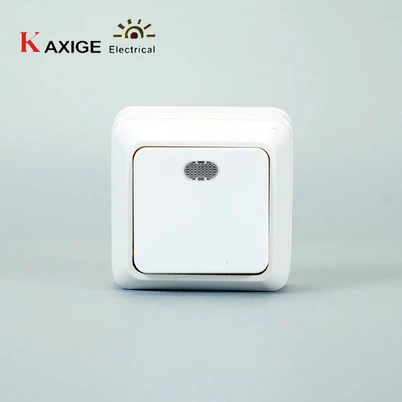
As an electric switch supplier, we offer a wide range of both momentary and maintained switches to meet the diverse needs of our customers. Our 73B 1 Gang Switch with Lamp Indicator is a high - quality maintained switch. It is designed for use in wall - mounted lighting circuits and features a built - in lamp indicator that provides a visual indication of the switch's state.
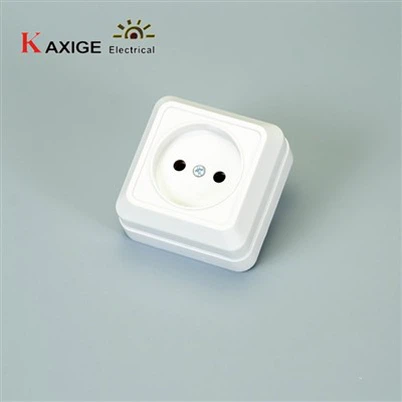
Our 73B 1 Gang Socket 2P is another popular product. It is a maintained device that provides a reliable power connection for electrical appliances. The socket is designed to be durable and safe, with features such as overload protection and child - proof shutters.
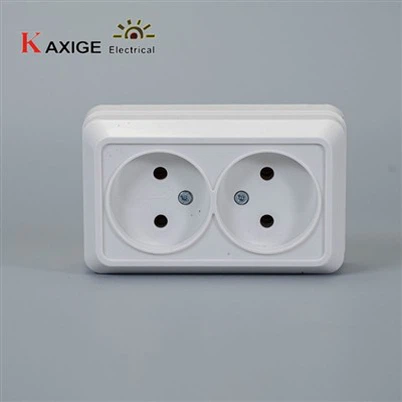
We also offer the 73B Switch and Socket Combination, which combines the functionality of a maintained switch and a socket in a single unit. This product is ideal for applications where you need to control the power supply to an appliance while also having a convenient power outlet.
Conclusion
In conclusion, understanding the difference between momentary and maintained electric switches is essential for anyone involved in electrical engineering, whether you are a professional installer, an equipment manufacturer, or a homeowner. Momentary switches are suitable for short - term, temporary operations, while maintained switches are used for long - term control of electrical circuits.
As an electric switch supplier, we are committed to providing high - quality switches that meet the needs of our customers. Whether you need a momentary switch for a control panel or a maintained switch for a lighting system, we have the products and expertise to help you. If you are interested in our products or have any questions about momentary or maintained switches, please feel free to reach out to us for procurement and further discussions.
References
- Electrical Engineering Handbook, Third Edition, edited by Richard C. Dorf
- Principles of Electric Circuits: Conventional Current Version, Tenth Edition, by Thomas L. Floyd