How does an AC dimmer switch work?
Leave a message

As a supplier of AC dimmer switches, I've witnessed firsthand the growing demand for these versatile devices in both residential and commercial settings. AC dimmer switches have revolutionized the way we control lighting, offering a convenient and energy - efficient solution to adjust the brightness of lights. In this blog, I'll delve into the inner workings of AC dimmer switches, explaining the science behind their operations and how they can enhance your lighting experience.
The Basics of Alternating Current (AC)
Before we explore how an AC dimmer switch works, it's essential to understand the concept of alternating current. Unlike direct current (DC), which flows in one direction, AC periodically reverses its direction. In most countries, the standard household electrical supply is AC with a frequency of either 50 or 60 Hertz (Hz). This means that the current changes direction 50 or 60 times per second, respectively.
The voltage of an AC supply also varies sinusoidally over time. The voltage reaches a maximum positive value, then decreases to zero, and then reaches a maximum negative value before returning to zero again. This sinusoidal variation in voltage and current is what allows AC to be easily transmitted over long distances and is the basis for many electrical devices, including AC dimmer switches.
The Working Principle of an AC Dimmer Switch
The primary function of an AC dimmer switch is to control the amount of power delivered to a light fixture, thereby adjusting its brightness. It does this by altering the portion of the AC waveform that is allowed to pass through to the load (the light bulb).
Phase - Control Dimming
The most common type of AC dimmer switch uses a technique called phase - control dimming. There are two main types of phase - control dimming: leading - edge dimming and trailing - edge dimming.
Leading - Edge Dimming
Leading - edge dimming is the older and more traditional method. It works by chopping off the leading part of each half - cycle of the AC waveform. When the switch is turned on, it waits for a certain period after the start of each half - cycle before allowing the current to flow to the load.
The angle at which the switch starts to conduct current is called the firing angle. A small firing angle means that the switch starts conducting early in the half - cycle, allowing more of the waveform to pass through to the load, resulting in higher brightness. Conversely, a large firing angle means that the switch starts conducting later in the half - cycle, allowing less of the waveform to pass through, and thus reducing the brightness of the light.
Leading - edge dimmers are typically used with incandescent and halogen bulbs. These bulbs are resistive loads, which means that they have a relatively simple electrical characteristic. The sudden change in current at the firing angle does not cause significant problems for these types of bulbs.
Trailing - Edge Dimming
Trailing - edge dimming, on the other hand, chops off the trailing part of each half - cycle of the AC waveform. The switch conducts current from the start of the half - cycle and then stops conducting at a certain point before the end of the half - cycle.
Trailing - edge dimmers are better suited for use with electronic low - voltage (ELV) transformers and LED bulbs. LED bulbs and ELV transformers are more sensitive to electrical disturbances than incandescent and halogen bulbs. Trailing - edge dimming provides a smoother transition in current, which is less likely to cause flickering or other issues with these types of loads.
Electronic Components in an AC Dimmer Switch
To implement phase - control dimming, an AC dimmer switch contains several key electronic components.
Triac
The triac is a crucial component in most AC dimmer switches. It is a semiconductor device that can conduct current in both directions, making it suitable for use with AC. The triac is controlled by a small current applied to its gate terminal. By varying the timing of this gate current, the firing angle of the triac can be adjusted, thereby controlling the amount of power delivered to the load.


Diac
A diac is often used in conjunction with a triac in an AC dimmer switch. The diac is a two - terminal device that conducts current only when the voltage across its terminals reaches a certain breakover voltage. It is used to trigger the triac at the desired firing angle. When the voltage across the diac reaches the breakover voltage, it conducts current, which then triggers the triac to start conducting.
Potentiometer or Sensor
To allow the user to adjust the brightness of the light, an AC dimmer switch usually includes a potentiometer or a sensor. A potentiometer is a variable resistor that can be adjusted by turning a knob or sliding a lever. As the resistance of the potentiometer changes, it affects the timing of the gate current to the triac, thereby changing the firing angle and the brightness of the light.
Some modern dimmer switches use sensors, such as touch sensors or motion sensors, to control the brightness. These sensors can detect the presence of a person or a touch and adjust the light accordingly.
Applications of AC Dimmer Switches
AC dimmer switches have a wide range of applications in both residential and commercial settings.
Residential Applications
In homes, AC dimmer switches are commonly used in living rooms, bedrooms, dining rooms, and kitchens. They allow homeowners to create different lighting moods for various activities. For example, you can dim the lights in the living room for a cozy movie night or brighten them for a party. Dimmer switches can also be used in hallways and stairways to provide just enough light for safety without wasting energy.
Commercial Applications
In commercial buildings, AC dimmer switches are used in offices, restaurants, hotels, and theaters. In offices, dimming the lights can help reduce eye strain and create a more comfortable working environment. In restaurants and hotels, dimmer switches can be used to create a romantic or relaxing atmosphere. In theaters, they are essential for controlling the stage lighting during performances.
Our Product Range
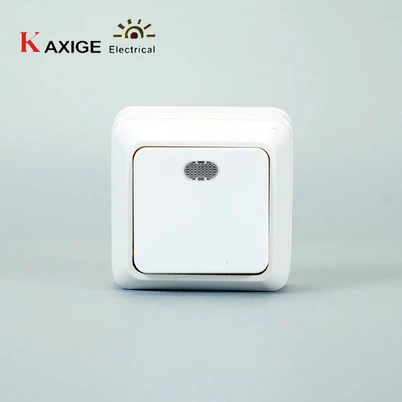
As a supplier of AC dimmer switches, we also offer a variety of other high - quality electrical products. For example, we have the 73B Switch and Socket Combination, which combines the functionality of a switch and a socket in one unit. This is a convenient solution for areas where you need both a power outlet and a switch to control a light or other device.
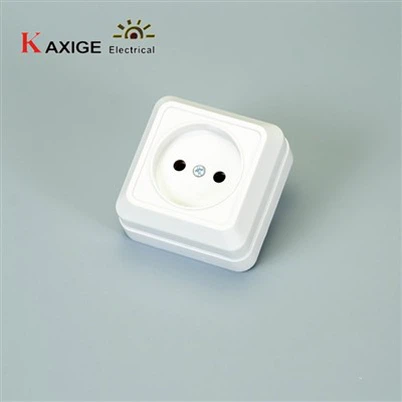
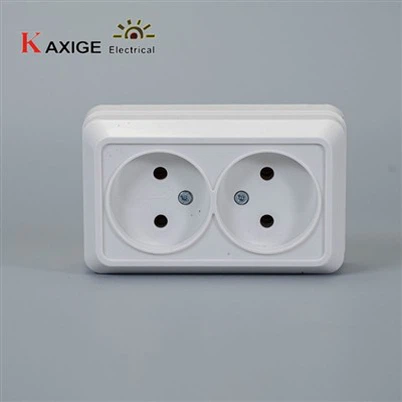
We also provide the 73B 1 Gang Socket Grounding and 73B 2 Gang Sockets. These sockets are designed to provide a safe and reliable power supply for your electrical devices.
Contact Us for Procurement
If you are interested in our AC dimmer switches or any of our other electrical products, we encourage you to contact us for procurement. Our team of experts is ready to assist you in finding the right products for your needs. Whether you are a homeowner looking to upgrade your lighting system or a contractor working on a large - scale commercial project, we have the products and the knowledge to meet your requirements.
References
- Horowitz, P., & Hill, W. (1989). The Art of Electronics. Cambridge University Press.
- Boylestad, R. L., & Nashelsky, L. (2002). Electronic Devices and Circuit Theory. Prentice Hall.