How does a dimmer switch socket work?
Leave a message

Hey there! As a supplier of switch sockets, I often get asked about how different types of sockets work. Today, I'm gonna focus on dimmer switch sockets. You know, those nifty little devices that let you adjust the brightness of your lights with just a turn or a slide. It's a cool feature that can really set the mood in any room, whether you're having a romantic dinner or just want to relax after a long day.
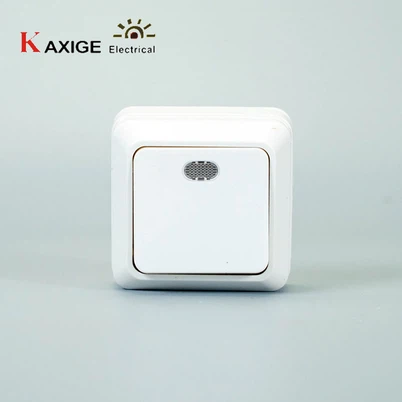
So, let's start from the basics. A dimmer switch socket is essentially a combination of a socket and a dimmer switch. The socket part is where you plug in your light fixture, and the dimmer switch is what controls the amount of electricity flowing to the light. By adjusting the dimmer, you can make the light brighter or dimmer according to your needs.
Now, how does it actually work? Well, it all comes down to controlling the electrical current. In a regular socket, the electricity flows at a constant rate, which means the light is either on at full brightness or off. But in a dimmer switch socket, the flow of electricity is adjusted. There are a few different ways this can be done, but the most common method is by using a technique called phase control.


Phase control works by chopping up the alternating current (AC) waveform. You see, AC electricity constantly changes direction, and it has a characteristic waveform that looks like a sine wave. A dimmer switch uses a device called a triac (which is a type of semiconductor) to control when the current is allowed to flow during each cycle of the AC waveform.
Let's break it down a bit more. When you turn the dimmer switch to a lower setting, the triac delays the start of the current flow in each cycle. This means that less electricity is delivered to the light bulb over time, and the light appears dimmer. As you turn the dimmer up, the triac allows the current to start flowing earlier in each cycle, so more electricity reaches the bulb and the light gets brighter.
Another way some dimmer switch sockets work is through pulse width modulation (PWM). This method is more commonly used in LED lighting. Instead of chopping up the AC waveform, PWM rapidly turns the power on and off at a very high frequency. By varying the amount of time the power is on (the pulse width), the average power delivered to the light can be adjusted. For example, if the power is on for a short time and off for a long time in each cycle, the light will be dim. If the power is on for a longer time, the light will be brighter.
One of the great things about dimmer switch sockets is that they can be used with different types of light bulbs. However, it's important to make sure that the dimmer is compatible with the type of bulb you're using. For incandescent bulbs, most standard dimmers work just fine. But for LED and fluorescent bulbs, you need to use a dimmer specifically designed for those types of lights. That's because LED and fluorescent bulbs have different electrical characteristics compared to incandescent bulbs, and using the wrong dimmer can cause issues like flickering or buzzing.
Now, let's talk about the benefits of using dimmer switch sockets. First of all, they offer a lot of flexibility in terms of lighting control. You can create different lighting atmospheres in your home or office, depending on the occasion. For example, you can have bright light for reading or working, and then dim it down for a more relaxing environment.
Secondly, dimmer switch sockets can help you save energy. By reducing the brightness of the lights when you don't need full illumination, you're using less electricity. This not only helps the environment but also saves you money on your energy bills in the long run.
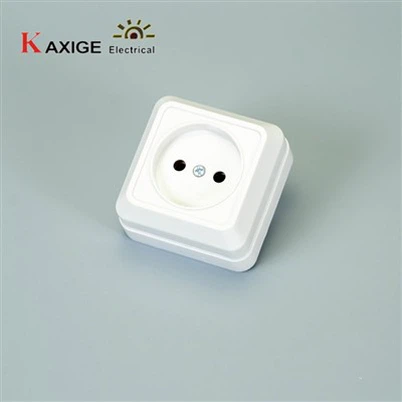
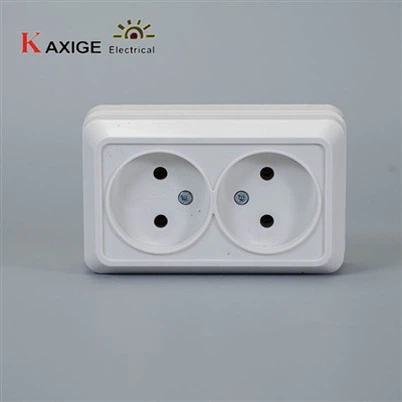
At our company, we offer a wide range of switch sockets, including dimmer switch sockets. We also have some great products in our 73V series, like the 73V Computer Data Socket, 73V 2 Gang Sockets, and 73V 1 Gang Socket 2P. These sockets are not only functional but also stylish, and they can add a touch of modernity to any space.
If you're interested in purchasing our switch sockets, especially the dimmer switch sockets, we'd love to have a chat with you. Whether you're a homeowner looking to upgrade your lighting or a contractor working on a big project, we can provide you with the right products and solutions. Just reach out to us, and we'll be happy to discuss your needs and help you find the perfect switch sockets for your situation.
In conclusion, dimmer switch sockets are a really useful and versatile addition to any electrical system. They work by controlling the flow of electricity to the light, either through phase control or pulse width modulation. They offer flexibility in lighting control and can help you save energy. And if you're in the market for quality switch sockets, don't hesitate to get in touch with us.
References
- "Electrical Wiring Handbook" by Rex Miller
- "Lighting Basics: How Dimmers Work" - Various online resources on electrical engineering and lighting technology.