How many lights can a single wall light switch for home control?
Leave a message

Hey there! As a supplier of wall light switches for homes, I often get asked this question: "How many lights can a single wall light switch for home control?" Well, the answer isn't as straightforward as you might think. Let's dive into it.
Understanding the Basics
First off, we need to understand a bit about electrical circuits and how wall light switches work. A wall light switch is essentially a device that controls the flow of electricity to a circuit. When you flip the switch on, it closes the circuit, allowing electricity to flow to the lights and turn them on. When you flip it off, it opens the circuit, stopping the flow of electricity and turning the lights off.
The number of lights a single wall light switch can control depends on a few factors, including the type of switch, the wattage of the lights, and the capacity of the electrical circuit.
Types of Wall Light Switches
There are different types of wall light switches available in the market, each with its own capabilities.
-
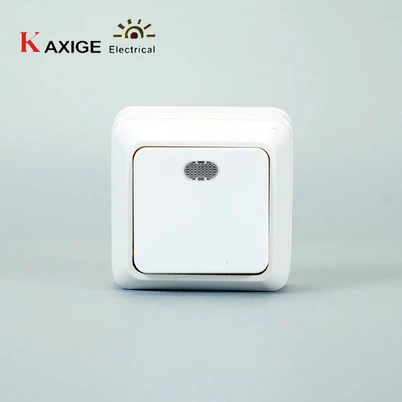
Standard On/Off Switches: These are the most common type of wall light switches. They simply turn the lights on or off. The number of lights they can control depends on the wattage of the lights and the amperage rating of the switch. Most standard on/off switches are rated for 15 or 20 amps. For example, a 15 - amp switch can handle a maximum load of about 1800 watts (since power = voltage x current, and in a typical household circuit in the US, voltage is 120 volts, so 15 amps x 120 volts = 1800 watts). If you have 60 - watt light bulbs, you could theoretically connect up to 30 bulbs (1800 watts / 60 watts = 30) to a 15 - amp switch. However, it's always a good idea to leave some margin for safety, so you might want to limit it to around 20 bulbs.
-
Dimmer Switches: Dimmer switches allow you to adjust the brightness of the lights. They work by controlling the amount of electrical power that reaches the lights. The capacity of a dimmer switch is also rated in watts. For instance, a common dimmer switch might be rated for 600 watts. If you're using 40 - watt LED bulbs, you could connect up to 15 bulbs (600 watts / 40 watts = 15) to this dimmer switch. You can check out our 73B Dimmer Switch for a great option in this category.
Wattage of the Lights
The wattage of the lights is a crucial factor. Different types of lights have different wattages. For example, traditional incandescent bulbs typically have higher wattages compared to LED bulbs. An incandescent bulb might be 60 watts or more, while an LED bulb of similar brightness could be as low as 6 - 10 watts.
Let's say you have a 15 - amp switch with a maximum load capacity of 1800 watts. If you're using 10 - watt LED bulbs, you could potentially connect up to 180 bulbs (1800 watts / 10 watts = 180). But again, we need to consider other factors like the heat generated and the overall stability of the circuit.
Capacity of the Electrical Circuit
The electrical circuit in your home also plays a role. Each circuit in your house is designed to handle a certain amount of electrical load. Most household circuits are either 15 - amp or 20 - amp circuits. If you try to connect too many lights to a single switch and exceed the capacity of the circuit, you could trip the circuit breaker.
For example, if you have a 15 - amp circuit and you connect a large number of high - wattage lights through a single switch, the total load might exceed 1800 watts, causing the circuit breaker to trip. It's important to make sure that the total load on the circuit, including all the lights and other electrical devices connected to it, stays within the rated capacity of the circuit.
Practical Considerations
In real - life situations, there are other practical considerations when deciding how many lights to connect to a single switch.
-
Lighting Design: You might want to group lights in a way that makes sense for your lighting design. For example, you might have a switch for the main overhead lights in a room and another switch for the accent lights. This gives you more control over the lighting atmosphere in the room.
-
Heat Generation: Lights generate heat, and if you have too many lights connected to a single switch, the heat buildup could be a problem. This is especially true for incandescent bulbs, which produce a lot of heat. LED bulbs, on the other hand, generate much less heat.
-
Ease of Use: Having too many lights controlled by a single switch can make it difficult to manage. If you want to turn off just one or two lights, it might be more convenient to have them on a separate switch.
Our Product Range
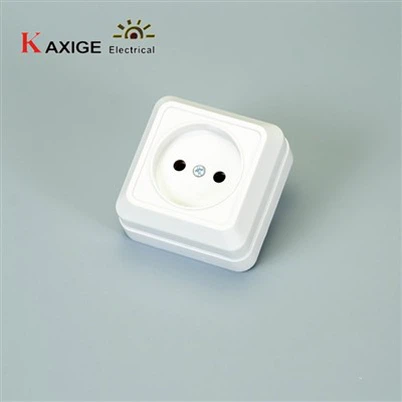
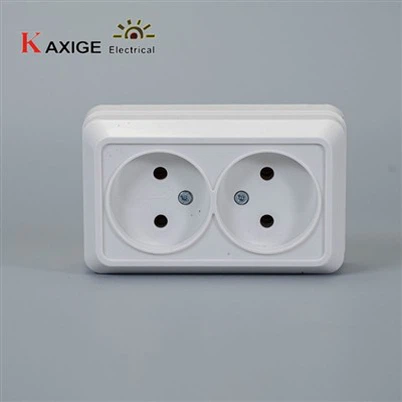
At our company, we offer a wide range of wall light switches for home use. Our 73B Switch and Socket Combination is a great option if you need both a switch and a socket in one unit. It's designed to be durable and easy to install.
We also have the 73B 1 Gang Socket Grounding, which provides a safe and reliable way to connect electrical devices.
Conclusion
So, to answer the question "How many lights can a single wall light switch for home control?", it depends on the type of switch, the wattage of the lights, and the capacity of the electrical circuit. As a general rule, it's always better to err on the side of caution and not overload the switch or the circuit.


If you're planning a home lighting project or need to replace your existing wall light switches, we're here to help. We can provide you with the right products and advice to ensure that your lighting system works safely and efficiently.
If you're interested in our products or have any questions about how many lights a switch can control, feel free to reach out to us for a procurement discussion. We're looking forward to hearing from you and helping you with your home lighting needs.
References
- Electrical Wiring Handbook, various editions
- National Electrical Code (NEC) standards