How does a proximity electric switch detect objects?
Leave a message

As a seasoned electric switch supplier, I've witnessed firsthand the transformative impact of proximity electric switches across various industries. These remarkable devices have revolutionized the way we interact with technology, enabling seamless automation and enhancing safety in countless applications. In this blog post, I'll delve into the inner workings of proximity electric switches, exploring how they detect objects with precision and reliability.
Understanding Proximity Electric Switches
Proximity electric switches are non-contact sensors designed to detect the presence or absence of an object within a specified range. Unlike traditional mechanical switches, which require physical contact to operate, proximity switches use electromagnetic fields, light, or sound waves to sense the presence of an object. This non-contact operation offers several advantages, including increased durability, faster response times, and reduced wear and tear.
Types of Proximity Electric Switches
There are several types of proximity electric switches available, each with its own unique operating principle and application. The most common types include:
Inductive Proximity Switches
Inductive proximity switches are the most widely used type of proximity switch. They operate based on the principle of electromagnetic induction. When an electrically conductive object enters the sensing range of the switch, it disrupts the electromagnetic field generated by the switch's coil. This disruption causes a change in the electrical properties of the coil, which is detected by the switch's electronics. The switch then outputs a signal indicating the presence of the object.
Inductive proximity switches are ideal for detecting metallic objects, such as steel, aluminum, and copper. They are commonly used in industrial automation applications, such as conveyor systems, packaging machines, and robotic assembly lines.
Capacitive Proximity Switches
Capacitive proximity switches operate based on the principle of capacitance. They consist of a sensing electrode and a reference electrode, which form a capacitor. When an object enters the sensing range of the switch, it changes the capacitance between the electrodes. This change in capacitance is detected by the switch's electronics, which then outputs a signal indicating the presence of the object.
Capacitive proximity switches can detect both metallic and non-metallic objects, including liquids, plastics, and wood. They are commonly used in applications where the detection of non-metallic objects is required, such as level sensing in tanks and containers, and object detection in food and beverage processing.
Photoelectric Proximity Switches
Photoelectric proximity switches use light to detect the presence of an object. They consist of a light emitter and a light receiver. The emitter emits a beam of light, which is reflected off the object and detected by the receiver. When the receiver detects the reflected light, it outputs a signal indicating the presence of the object.
Photoelectric proximity switches can be further classified into three types: through-beam, retro-reflective, and diffuse. Through-beam switches have separate emitter and receiver units, which are placed opposite each other. The object to be detected passes between the emitter and receiver, interrupting the light beam. Retro-reflective switches use a reflector to bounce the light beam back to the receiver. The object to be detected passes in front of the reflector, interrupting the light beam. Diffuse switches have the emitter and receiver in the same unit. The light beam is emitted and reflected off the object, and the reflected light is detected by the receiver.
Photoelectric proximity switches are commonly used in applications where long-range detection or high-speed detection is required, such as object detection in conveyor systems, and presence detection in automatic doors.
Ultrasonic Proximity Switches
Ultrasonic proximity switches use sound waves to detect the presence of an object. They consist of an ultrasonic transducer, which emits a high-frequency sound wave. When the sound wave hits an object, it is reflected back to the transducer. The transducer then detects the reflected sound wave and measures the time it takes for the sound wave to travel to the object and back. Based on this measurement, the switch can determine the distance to the object.
Ultrasonic proximity switches can detect both solid and liquid objects, and they are not affected by the color, transparency, or surface finish of the object. They are commonly used in applications where the detection of objects in harsh environments is required, such as level sensing in tanks and containers, and object detection in automotive manufacturing.
How Proximity Electric Switches Detect Objects
The detection process of a proximity electric switch can be broken down into several steps:
Generation of the Sensing Field
The first step in the detection process is the generation of the sensing field. Depending on the type of proximity switch, this can be an electromagnetic field, a light beam, or a sound wave. The sensing field is generated by the switch's electronics and is emitted from the switch's sensing face.
Interaction with the Object
When an object enters the sensing range of the switch, it interacts with the sensing field. This interaction can cause a change in the electrical properties of the field, such as the strength, frequency, or phase. The nature of the interaction depends on the type of proximity switch and the properties of the object.
Detection of the Change
The switch's electronics continuously monitor the sensing field for any changes. When a change is detected, the electronics analyze the change to determine if it is caused by the presence of an object. If the change meets the switch's detection criteria, the electronics output a signal indicating the presence of the object.
Output of the Signal
Once the presence of the object is detected, the switch outputs a signal to the control system. This signal can be a digital signal, such as a voltage pulse or a relay contact closure, or an analog signal, such as a current or voltage level. The control system can then use this signal to trigger a specific action, such as starting or stopping a machine, or activating an alarm.
Applications of Proximity Electric Switches
Proximity electric switches are used in a wide range of applications across various industries. Some of the most common applications include:


Industrial Automation
In industrial automation, proximity electric switches are used to detect the presence or absence of objects on conveyor systems, packaging machines, and robotic assembly lines. They are also used to control the position and movement of machinery, such as motors, cylinders, and valves.
Automotive Manufacturing
In automotive manufacturing, proximity electric switches are used to detect the presence of parts on assembly lines, to control the operation of robots and automated equipment, and to monitor the position and movement of vehicles on production lines.
Food and Beverage Processing
In food and beverage processing, proximity electric switches are used to detect the level of liquids in tanks and containers, to control the flow of ingredients in mixing and filling machines, and to monitor the presence of packages on conveyor systems.
Home Automation
In home automation, proximity electric switches are used to detect the presence of people in rooms, to control the operation of lights, fans, and other appliances, and to monitor the security of homes.
Our Product Range
As an electric switch supplier, we offer a wide range of proximity electric switches to meet the needs of our customers. Our product range includes inductive proximity switches, capacitive proximity switches, photoelectric proximity switches, and ultrasonic proximity switches. We also offer a variety of accessories, such as mounting brackets, cables, and connectors, to make the installation and use of our switches as easy as possible.
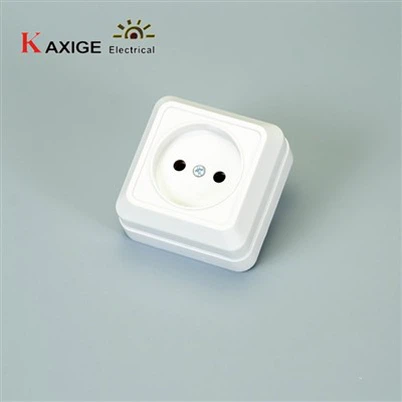
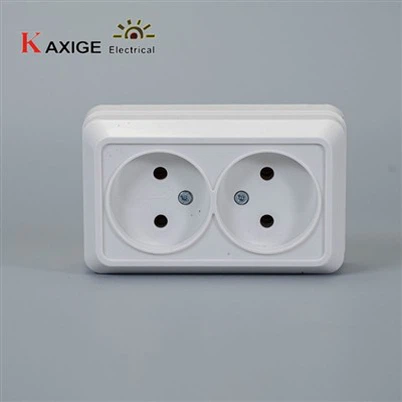
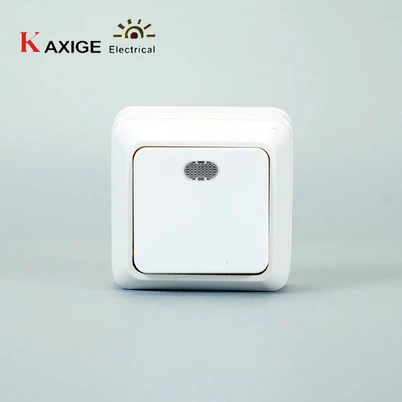
Some of our popular products include the 73B 1 Gang Socket Grounding, the 73B 2 Gang Switch, and the 73B 1 Gang Socket 2P. These products are designed to provide reliable and accurate object detection in a variety of applications.
Contact Us for Procurement
If you're interested in learning more about our proximity electric switches or would like to discuss your specific requirements, please don't hesitate to contact us. Our team of experts is always available to provide you with technical support and advice, and to help you choose the right switch for your application. We look forward to working with you to meet your electric switch needs.
References
- "Proximity Sensors: Principles, Types, and Applications." Sensors Magazine, 2023.
- "Industrial Automation Handbook." ISA - The Instrumentation, Systems, and Automation Society, 2022.
- "Automotive Manufacturing Technology." Society of Automotive Engineers (SAE), 2021.
- "Food and Beverage Processing Technology." Institute of Food Technologists (IFT), 2020.
- "Home Automation: A Comprehensive Guide." Home Automation Magazine, 2019.