Why the First Trial Order Is Often Where 2 Gang Switch Distributors Lose Money
Leave a message
Most distributors approach a new switch supplier the same cautious way: start small. Order 500 to 2,000 pieces of a 2 gang switch, test the market, and scale up once everything checks out. It feels like the safer move - less capital tied up, less exposure if something goes wrong.
In practice, it's often the opposite. A small trial order removes the safety nets that come with volume, and that's exactly when the three most common - and most expensive - mistakes in switch sourcing tend to surface.
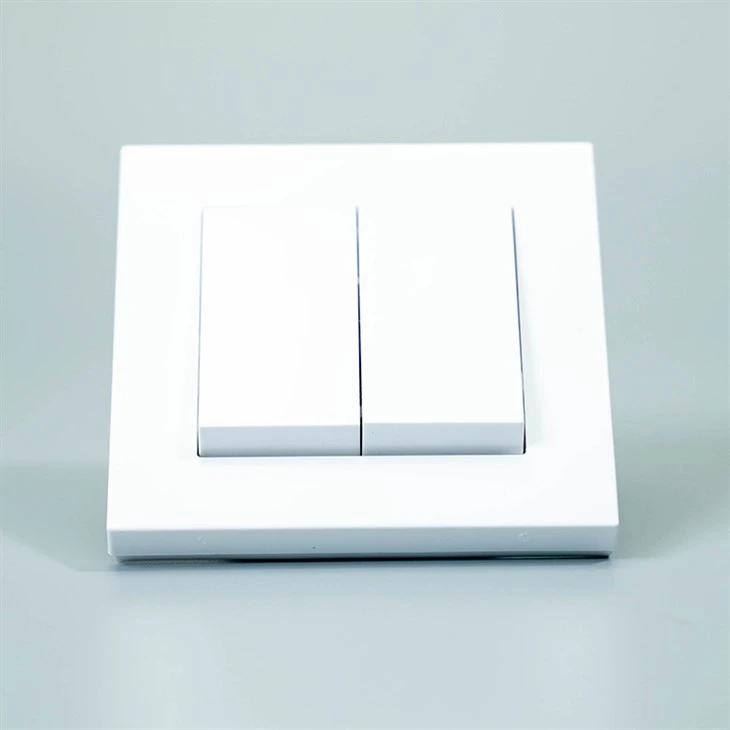
KAXIGE 8607series 2 Gang Switch
Mistake 1: Assuming a Small Batch Means Consistent Color
Every distributor knows to check the color options on a switch listing - white, ivory, black, sometimes a painted or metallic finish. What far fewer distributors check is whether that color is controlled by a fixed color card or mixed fresh for each production run.
On a 2,000-piece single-run order, this rarely causes a visible problem, because the whole batch comes off the same production cycle. The real risk shows up on reorder - the second batch, ordered a few months later, ends up a shade off from the first. For a distributor supplying retail shelves or matching switches to sockets already installed in a building, a visible color shift between batches isn't a cosmetic footnote. It's a returned shipment, or a client who quietly stops reordering because the last delivery didn't match the first.
Factories that manage color to a fixed Pantone or internal reference card - rather than mixing plastic pellets by eye for each run - can guarantee that a reorder six months later still matches. It's a detail that costs nothing to ask about upfront and can save an entire batch from rejection later.
Mistake 2: Treating Packaging as an Afterthought
A 2 gang switch destined for a hardware store shelf in Lagos needs different packaging than one heading to a bulk electrical wholesaler in Bucharest. Retail markets often expect individual polybag packaging with clear labeling for shelf display; wholesale and project buyers are usually fine with bulk carton packaging, since the switches get installed rather than displayed.
Distributors placing a first, small order sometimes accept whatever the factory's default packaging happens to be, assuming they'll refine it once volumes grow. The problem is that packaging mismatches tend to surface at the worst possible moment - during customs clearance, when documentation doesn't match declared packaging units, or when a retail partner rejects a shipment because the polybags don't meet local labeling requirements. Fixing this after the fact means a second production run, not a repackaging job, because most factories don't hold loose inventory to repack on demand.
Confirming packaging specifics before the first order - units per polybag, units per carton, and any labeling requirements for the destination market - costs a few extra emails. Discovering a mismatch after the shipment has left the port costs a lot more.
Mistake 3: Getting Deprioritized Because the Order Is Small
This is the mistake distributors are least likely to see coming, because no factory admits to it directly. Larger factories run production schedules around their biggest clients. A 2,000-piece trial order from a new distributor competing for line time against a 200,000-piece repeat order from an established buyer will, understandably, sit further back in the queue - and any question or revision request during that trial order tends to get a slower response than it would on a bigger account.
This isn't necessarily bad faith. It's simple production math. But it means a distributor's first experience with a supplier - the one that determines whether they place a second order at all - often happens under exactly the conditions where that supplier is least attentive.
The way to work around this isn't necessarily to place a bigger first order. It's to ask, before committing, how the factory handles trial orders specifically: whether there's a standard lead time for smaller runs, and whether sample and revision requests on a trial order get the same response time as a full production order. A factory that has a clear, repeatable answer to this - rather than a vague "we'll do our best" - is signaling that trial orders are a normal part of their process, not a nuisance squeezed in between bigger jobs.
What This Looks Like in a Real 2 Gang Switch Order
Our 8607 2 Gang Switch is manufactured to a fixed 86×86×49.4mm standard, in PC or ABS material, with color options - white, ivory, black, or custom painted finishes - controlled against a reference card so that a reorder matches the original batch. Packaging follows export standard as a baseline, with each switch individually polybagged and packed at set carton quantities, and we adjust labeling and packaging detail for specific destination markets on request rather than defaulting to a single format for every buyer, whether the order is 2,000 pieces or considerably more.
None of this guarantees a trial order will go perfectly - sourcing always carries some risk on both sides. But most of the risk in a small first order isn't the product itself; the mechanical specs and materials are usually straightforward to verify. It's the parts of the process that only become visible on reorder, on customs clearance, or on the second time an email goes unanswered for a week. Asking about those three things before placing a trial order costs very little. Finding out the hard way costs a lost shipment, or a partnership that ends after one try.

Zhejiang Honghuo Electric Co., Ltd, trading under the Kaixige brand, has manufactured wall switches, sockets, and plugs since 1985, with certifications including CE, RoHS, ISO9001, CCEE, CCC, and SNI, and export experience across markets including Russia, Ukraine, Romania, Turkey, South Africa, Nigeria, and Ethiopia.