Domestic vs. Overseas Switch Sockets: Key Differences & Industry Insights
Leave a message
In today's era of increasingly close global trade, switch sockets, as basic electrical accessories, show distinct regional characteristics in market demand. For enterprises focusing on power strip production, clarifying the product differences between overseas and domestic markets is the key to laying out international business. Zhejiang Honghuo Electric Co., Ltd. has been deeply engaged in European standard electrical products for more than 30 years and has profound industry insights into this.
The domestic power grid is uniformly 220V single-phase electricity, and sockets are mainly two-hole flat and three-hole flat types, forming a unified national standard system. The product interface specifications are consistent, adapting to most domestic electrical equipment without the need for additional adapters.

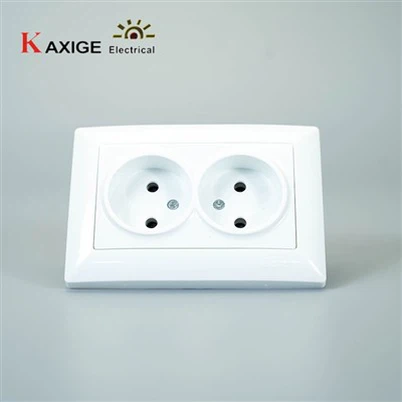
The overseas market presents a pattern of "multiple standards in multiple countries", with significant differences in voltage and interfaces in different regions: the mainstream voltage in Europe is 230V, and sockets are mainly European-standard two-hole round types. Countries such as France and Switzerland have also derived special models with grounding holes. European switch and modern power sockets have formed standardized design specifications under this system, adapting to the power demand of European household and commercial scenarios; North America adopts 120V voltage, and sockets are two-hole or three-hole flat designs, with completely different jack spacing from domestic ones, requiring targeted R&D of adaptive products; some Southeast Asian countries such as Indonesia not only follow the European standard system but also have special requirements for local SNI certification.
Domestic products need to pass the mandatory CCC certification, which focuses on electric shock protection and overload performance. It is a necessary qualification for products to enter the domestic market, ensuring the basic safety performance of products in daily use and avoiding electrical risks.
Overseas markets have more segmented certification requirements, and the certification standards in different regions have their own focuses: the CE certification in Europe is the basic access requirement, and the ROHS directive has strict restrictions on harmful substances such as lead and cadmium. To enter the European market, European switch must meet both CE certification and ROHS directive requirements; the German VDE certification is famous for its strict durability testing and has become a "pass" for the high-end market. Products passing this certification are more competitive in quality; the North American UL certification focuses on fire performance and has extremely high requirements for the flame retardancy of product materials. With advanced testing equipment, Zhejiang Honghuo Electric Co., Ltd. has fully obtained various national certifications such as CE, ROHS, and SNI, perfectly adapting to overseas safety standards.

Domestic sockets focus on compactness to adapt to the limited space of domestic wall surfaces, with a relatively simple design style, which can meet daily basic power needs. In terms of material selection, domestic products mostly use ordinary flame-retardant plastics, balancing safety and cost-effectiveness, and adapting to the needs of the domestic mass consumer market.
The product design and usage scenarios of overseas markets are more targeted: the European market emphasizes modularization more. Sockets can be flexibly matched with USB interfaces, dimming switches and other accessories to meet the needs of smart homes. Under this trend, modern power sockets have gradually integrated intelligent design to realize linkage with smart home systems; in terms of material selection, European standards require the use of PC materials with higher temperature resistance to ensure long-term use safety and resist aging risks in high-temperature environments. In Honghuo Electric's 23,000-square-meter production base, advanced equipment such as injection molding machines are providing support for this high-specification demand, ensuring that product materials and processes meet European market standards.
Since its establishment in 1985, Honghuo Electric has evolved from Huada Electric to a professional brand today, focusing on European standard products. For power strip enterprises, the differences in overseas markets are both challenges and opportunities. Only by accurately matching the voltage standards of the target market, obtaining authoritative certifications, and optimizing product design can we gain a firm foothold in international competition.
With a full range of certifications such as CCC and ISO9001 and mature production capacity, Honghuo Electric is providing high-quality electrical products that meet regional needs for global customers. The European switch and modern power sockets produced by it not only adapt to the European market but also meet the personalized needs of multiple regions. This is also a powerful practice of Chinese intelligent manufacturing going global, providing valuable experience for more electrical enterprises to layout overseas markets.